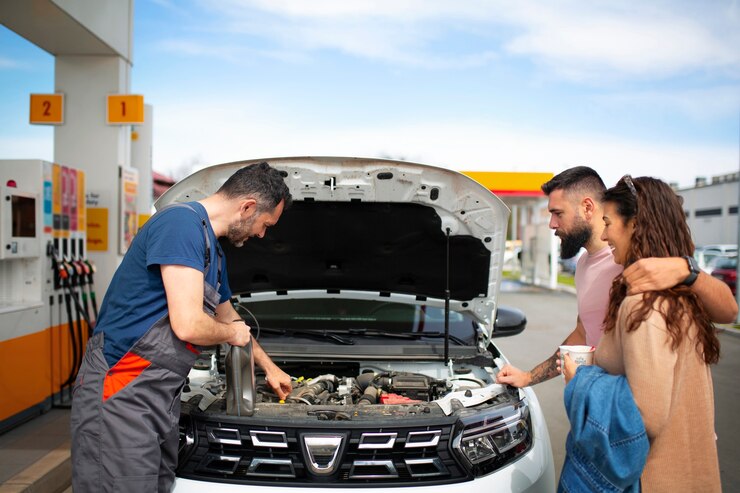
Canadian vehicles face a set of challenges that drivers in more temperate climates rarely encounter. Temperatures in the Ottawa region regularly swing from –30°C in January to +35°C in July. Road salt, used liberally from late October through March, accelerates corrosion on undercarriage components. Spring potholes emerge after each freeze-thaw cycle. Summer heat stresses cooling systems and tires. Each season introduces specific maintenance needs that, if addressed proactively, help preserve vehicle reliability and longevity.
This article goes through each season with practical, specific guidance on what to check and when to address it. Some of these items you can monitor yourself; others require professional service equipment. The goal is to give you a clear framework for seasonal vehicle care rather than a generic checklist.
🍂 Fall: Preparing for Winter
Fall is arguably the most important maintenance season for Canadian drivers, because poor preparation can result in a no-start on a January morning, reduced braking ability on ice, or a vehicle stranded in a snowstorm. The window before consistent freezing temperatures is the right time to address the following:
Winter Tires
This is the single most impactful safety change you can make for winter driving. Winter tires differ from all-season tires in two fundamental ways: their rubber compound remains pliable below 7°C (all-season rubber hardens significantly in cold temperatures), and their tread pattern is specifically designed to channel snow and slush while maintaining contact with the road surface.
In Quebec, winter tires are legally required. In Ontario, including Ottawa, they are not mandatory for most passenger vehicles, but many insurance providers offer a premium reduction for vehicles equipped with them. More to the point, the difference in traction, braking distance, and cornering grip between winter and all-season tires in cold conditions is measurable and significant.
Install winter tires when temperatures begin consistently dropping below 7°C — in the Ottawa area, this typically means mid-October to early November. Many drivers wait until after the first snowfall, by which point tire shops are extremely busy. Booking an appointment in September or early October avoids the rush.
Battery Testing
A battery at 50% capacity might start your vehicle reliably in September but fail in January. Cold temperatures reduce a battery's chemical reaction rate, meaning it delivers less cranking amperage precisely when the cold-thickened engine oil demands more. A battery load test — not just a resting voltage check — measures actual available capacity. If your battery is over four years old, testing it before winter is worthwhile.
Coolant Concentration
Antifreeze concentration must be adequate for the expected low temperature. In Ottawa, protection to at least –40°C is appropriate. An inexpensive antifreeze refractometer or test strip can check concentration, or a technician can verify it during a service visit. Coolant that is diluted or degraded should be flushed and replenished.
Brakes
Winter conditions increase the demands on the brake system — stopping distances increase on snow and ice, and brake components are exposed to significant salt contamination. If brake pads are approaching their service limit, replacing them before winter makes sense. Brake fluid condition is also worth checking, as moisture-saturated fluid performs worse in cold-weather braking.
Wiper Blades and Washer Fluid
Summer wiper blades clog with snow and ice. Winter-specific blades have a covered frame that prevents snow buildup. Replace the washer fluid with a freeze-resistant formulation rated to at least –40°C — standard summer fluid will freeze in the reservoir and spray nozzles in cold weather.
❄️ Winter: Ongoing Maintenance
Once winter arrives, the focus shifts from preparation to monitoring and maintenance. Certain items need regular attention throughout the season.
Tire Pressure
Tire pressure drops approximately one PSI for every 5–6°C decrease in temperature. A tire inflated to the correct pressure in October will be several PSI low by February if never checked. Under-inflated tires have reduced contact area with the road, less effective grip, and wear more rapidly. Check tire pressure periodically throughout winter — ideally when the tires are cold, before the vehicle has been driven. Use the pressure specified on the sticker inside the driver's door jamb, not the maximum pressure printed on the tire sidewall.
Washer Fluid
Ottawa roads in winter produce a constant spray of salt and slush on the windshield. Washer fluid consumption is dramatically higher in winter than in summer. Keep a spare jug in the trunk. Running out of washer fluid on a highway with trucks spraying salt on a grey day is a visibility problem.
Keeping the Fuel Tank Reasonably Full
This matters for two reasons. First, a fuller tank reduces the amount of air space that allows condensation to form — water in the fuel system can cause performance issues and, in extreme cold, fuel line freeze in older vehicles. Second, if you become stranded, fuel is what keeps the heater running.
Salt Wash
Road salt is highly corrosive to metal. Undercarriage components — brake lines, fuel lines, exhaust, and structural elements — are all vulnerable to salt-accelerated corrosion. During prolonged mild periods in winter, washing the underside of the vehicle reduces salt accumulation. Many car washes have an undercarriage rinse cycle.
🌱 Spring: Post-Winter Recovery
Spring in the Ottawa area typically means potholes, road debris, and the aftermath of several months of salt exposure. It's a good time to assess what winter did to your vehicle.
Remove Winter Tires
Once temperatures are consistently above 7°C, winter tires should come off. Driving winter tires in warm weather causes them to wear more rapidly — the soft compound is not designed for warm pavement. More importantly, a fresh set of all-season or summer tires handles better in spring and summer conditions.
Alignment Check
Spring potholes are notorious for knocking vehicles out of alignment. If the car pulls to one side, the steering wheel is offset, or you notice uneven tire wear, an alignment check is worthwhile after winter. Even without obvious symptoms, an alignment check after a winter of Ottawa's roads is a reasonable precaution.
Undercarriage Inspection
A post-winter undercarriage inspection assesses the toll that road salt has taken. Brake line condition should be checked — lines develop external rust that can eventually compromise them. Rubber boots on CV joints and suspension components should be inspected for cracking. Fresh rust can be treated or coated; advanced corrosion may require component replacement.
Brake Inspection
Winter is hard on brake systems. Salt contamination can cause calipers to seize partially, pad wear is accelerated by cold and grit, and rotors can develop surface rust that, while usually temporary, can sometimes indicate uneven use. A spring brake inspection confirms the system is in good condition heading into the rest of the year.
☀️ Summer: Heat Management
Summer's heat creates a different set of challenges. Engine temperatures rise, tires are vulnerable to overinflation, and fluids reach their operational limits more quickly under sustained load.
Cooling System
The cooling system works harder in summer. Check coolant level when the engine is cold. If the level is consistently dropping, there may be a slow leak. Overheating events — the temperature gauge climbing higher than normal — should be taken seriously. Modern engines can suffer significant damage from overheating quite quickly. If the temperature gauge moves into the red, the safest response is to pull over safely and turn the engine off rather than trying to reach a destination.
Air Conditioning
AC systems that aren't used all winter can develop issues that only become apparent in summer heat. If the system doesn't cool effectively, a recharge may be needed, or there may be a refrigerant leak. AC systems should not be recharged repeatedly without diagnosing the source of the refrigerant loss.
Tire Pressure in Heat
Heat expands air, so tire pressure rises in summer. Tires that were inflated correctly in spring may be slightly over-inflated in July. Over-inflation reduces the contact patch, can make the ride harsher, and in extreme cases can increase blowout risk. Check tire pressure when tires are cold for an accurate reading.
Long Trip Preparation
If a significant road trip is planned, a pre-trip inspection is a sensible investment. Check all fluids, tire condition and pressure, lights, wiper blades, and battery. Knowing the vehicle is in good mechanical shape before a long drive is worth more than the cost of the inspection if it prevents a breakdown in an inconvenient location.
Year-Round Habits That Make a Difference
Beyond seasonal tasks, a few ongoing habits contribute meaningfully to long-term vehicle health. Staying current on oil changes is the most impactful. Paying attention to how the vehicle drives — any changes in sound, feel, or behaviour are worth investigating rather than ignoring. Addressing small issues before they grow is almost always less expensive than waiting for a system to fail.
Canadian vehicles are asked to perform across a demanding climate range. The ones that remain reliable over high mileage are almost invariably the ones whose owners stayed current on maintenance. The seasonal framework described in this article is a practical starting point for that kind of approach.
Seasonal tire swaps and maintenance services are available at our Ottawa workshop. Book early in fall and spring to avoid the seasonal rush. Contact us or call +1 613-327-4452.