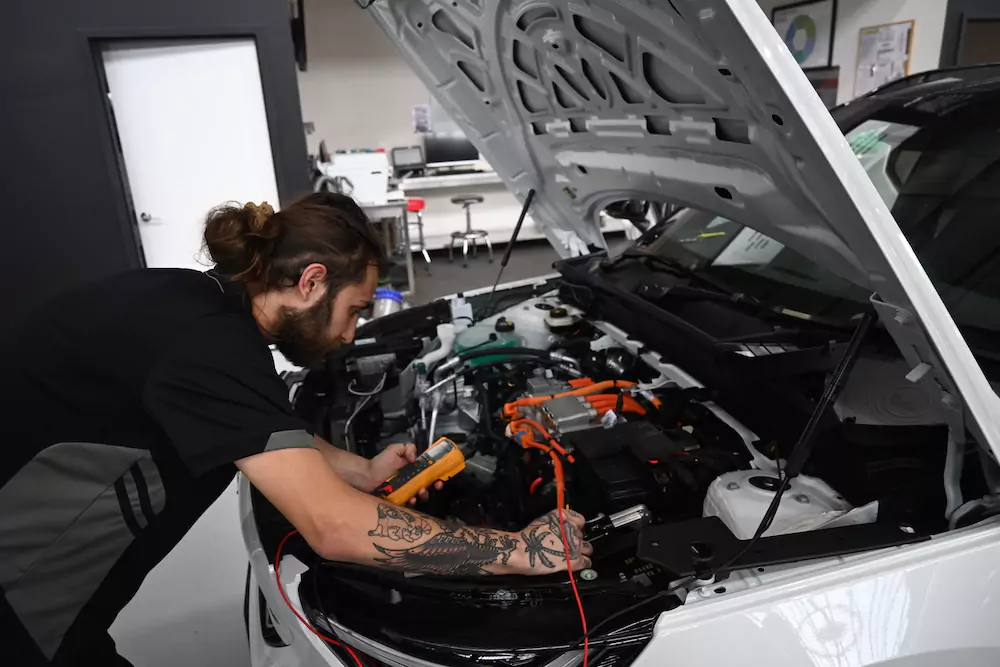
There is a common pattern in automotive repair: a driver brings in a vehicle because something has failed, and in the process of diagnosing the failure, a technician finds several other issues that have been developing for some time. In many cases, those secondary problems could have been addressed months earlier at a fraction of the eventual cost.
Regular vehicle inspections don't eliminate mechanical failures — components wear out and systems degrade regardless — but they give you a much better chance of addressing problems while they're still manageable. This article explains what inspections actually cover, how they work in practice, and why the cost of a periodic inspection is typically a sound investment.
What a Multi-Point Inspection Covers
A multi-point inspection is a structured check of a vehicle's major systems conducted by a technician. It is not a diagnosis of a specific problem — it is a systematic review of the vehicle's overall condition. The scope varies by shop and service level, but a comprehensive inspection generally covers the following areas:
Brake System
Brake pad thickness is measured and compared against the minimum specification. Rotor thickness and surface condition are assessed — scoring, deep grooves, and heat cracks are noted. Calipers are checked for proper movement and for signs of fluid leakage. Brake hoses are inspected for swelling or cracking. This is one of the most safety-critical sections of an inspection, and the condition data collected is objective and measurable.
Tires and Wheels
Tread depth is measured at multiple points across each tire. Uneven wear patterns — cupping, feathering, edge wear — indicate specific mechanical issues such as alignment problems or worn suspension components. Tire sidewalls are inspected for cracking, bulging, or damage. Wheel condition is checked for cracking or corrosion at the bead seat.
Suspension and Steering

Ball joints, tie rod ends, control arm bushings, and sway bar links are checked for play and condition. Shock absorbers and struts are assessed for leaking fluid and physical damage. The steering rack is examined for looseness and for fluid leakage where applicable. These components can degrade gradually over years without producing obvious symptoms until they are significantly worn.
Fluid Levels and Condition
Engine oil level and condition are checked. Coolant level and concentration are assessed. Brake fluid condition can be evaluated with a test strip that measures moisture content. Power steering fluid, transmission fluid, and differential fluid are inspected where accessible. Low or degraded fluids in any of these systems can lead to accelerated wear or component failure.
Battery and Charging System
Battery voltage at rest and under load provides a more accurate picture of remaining capacity than a simple voltage reading. Terminals are checked for corrosion. The alternator output is tested to confirm the charging system is maintaining adequate voltage.
Belts and Hoses
The serpentine belt is inspected for cracking, glazing, and fraying. A failed serpentine belt can disable the alternator, power steering, water pump, and air conditioning simultaneously — and leave you stranded. Coolant hoses are checked for softness, hardness, and swelling at the connections.
Lights and Wipers
All exterior lights — headlights, brake lights, indicators, reverse lights — are tested for proper function. Wiper blades are inspected for streaking or skipping. These items are often overlooked by drivers until they fail during use, sometimes in conditions where they are critically needed.
The Economics of Early Detection
The value of an inspection is easier to appreciate when you consider specific examples. A brake pad that is approaching minimum thickness costs significantly less to replace than one that has worn through to the metal backing plate and scored the rotor. At that point, rotor replacement is added to the cost — sometimes doubling or tripling the original repair bill.
A minor coolant leak — a seeping hose clamp or a weeping water pump — can be repaired inexpensively if caught during a routine inspection. Left unnoticed, low coolant leads to overheating, which can cause head gasket failure, warped cylinder heads, or in severe cases, engine damage that costs thousands to repair.
A worn CV boot — the rubber boot that protects the constant velocity joint in a front-wheel-drive vehicle — is a straightforward and inexpensive repair when caught early. Once the boot fails and the grease inside the joint is exposed to road contamination, the joint itself degrades rapidly and eventually requires full replacement at considerably higher cost.
Inspection Findings Are Advisory, Not Obligations
It's worth being clear about something: a reputable shop will provide you with inspection findings and recommendations, but the decision about what to repair and when is always yours. A good technician will distinguish between items that are immediately unsafe, items that should be addressed in the near future, and items that are simply worth monitoring.
Not every finding requires same-day action. If your shock absorbers show early signs of wear but are not yet critically degraded, a responsible advisor will note it and suggest you plan for it — not pressure you into an immediate repair. Understanding what is urgent and what can wait helps you budget and prioritize appropriately.
How Often Should You Have Your Vehicle Inspected?
The answer varies somewhat by vehicle age, mileage, and driving conditions. A reasonable general guideline for most passenger vehicles is a thorough inspection once a year, or every 15,000 to 20,000 kilometres — whichever comes first. Many shops, including ours, include a multi-point inspection with every oil change service, which typically means your vehicle is being reviewed two to three times per year under normal driving schedules.
Older vehicles and those with higher mileage benefit from more frequent attention. Rubber components — hoses, boots, belts, and bushings — begin to degrade more rapidly after a vehicle ages past ten years. Vehicles that are driven in particularly harsh conditions — extensive city driving, significant winter driving with road salt exposure, towing — also benefit from increased inspection frequency.
What to Expect at an Inspection
A thorough multi-point inspection typically takes 30 to 60 minutes depending on the scope. The vehicle is usually lifted on a hoist to allow access to the undercarriage. The technician works through a structured checklist and documents findings. A good shop will provide a written report of what was found, categorized by urgency. In some cases, a technician may invite you to come look at a specific finding — a cracked belt, a leaking hose, worn brake pads — so you can see the condition firsthand.
The key thing to look for in an inspection report is specificity. A useful finding tells you what was found, where, and to what degree — for example, "front brake pads at 2mm, minimum is 1mm, recommend replacement at next service." A vague finding — "brakes checked" — tells you nothing about condition.
A Note on Inspection Quality
Not all inspections are equal. A comprehensive inspection requires adequate time, a trained technician, and proper equipment including a vehicle lift. Be wary of "free inspections" that are completed in five minutes while the car is on the ground — they may check a few visible items but cannot cover the systems that require access to the undercarriage.
The value of an inspection depends almost entirely on the thoroughness and honesty of the technician performing it. An inspection that identifies everything while being honest about severity and urgency is genuinely useful. One that either misses things or exaggerates the urgency of findings is not.
Ready to book an inspection? We include a multi-point inspection with every preventive maintenance service. Contact us to schedule or call +1 613-327-4452.